As Congress gets ready to send its members out of Washington, D.C. for the August break, the U.S. House is trying to move through a flurry of legislation. The National Defense Authorization Act (NDAA), the budget reconciliation bill, and legislation to curb insider trading among Members of Congress were on the agenda on Wednesday.
The NDAA split the Oklahoma House Delegation, four to one, with H.R. 8800 passing by a margin of 216 to 212. Congressman Josh Breechen was the no vote among Oklahoma’s Representatives.
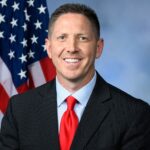 “Today, I voted “no” on the National Defense Authorization Act (NDAA) for fiscal year 2027. While I support providing for a robust national defense, I could not in good conscience vote for this legislation as it authorizes a $263.4 billion (29.6%) increase over the authorized level for the previous fiscal year. Looking to history, we know that once a level of spending is authorized, appropriators will rarely provide less funding than the maximum allowed. Furthermore, departmental funding baselines almost never decrease over time.
“Our Founding Fathers believed that public debt was among “the greatest of the dangers to be feared.” As George Washington once wrote, “avoiding likewise the accumulation of debt, not only by shunning occasions of expense, but by vigorous exertions in time of peace to discharge the debts, which unavoidable wars may have occasioned, not ungenerously throwing upon posterity the burthen, which we ourselves ought to bear.” We are currently facing the largest national debt in our country’s history, owing over $39.5 trillion, and we simply cannot bear the cost of additional, unpaid-for spending,” Brecheen posted on his official Facebook page.
Congressman Tom Cole, who chairs the House Appropriations Committee, pointed to rising national security concerns as the reason why he supported the NDAA.
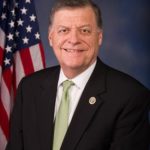 “During this time when our nation is facing the most dangerous threat environment in generations, protecting our nation’s defense is critical. Today, I cast my vote to do exactly that. The Fiscal Year 2027 NDAA increases pay for our selfless men and women in uniform, revitalizes American military strength, restores lethal capabilities, and strengthens deterrence by implementing President Trump’s peace through strength agenda – all while at the same time eliminating fraud, waste, and abuse at the Pentagon.
“Through passing the NDAA on the House Floor today, Republicans sent this very clear message to the rest of the world: our warfighters have the weapons to win, and our adversaries should stay in their lane,” said Cole in a statement.
Brecheen explained that he hoped Congress would use reconciliation to help cut spending.
“To achieve the transformative defense spending necessary for our nation’s future, we must either, in the current Reconciliation 3.0 or in a future reconciliation package, find meaningful offsets that would allow us to reach a higher annual defense spending target in a fiscally responsible way. Unlike providing additional defense funding in a reconciliation package, which is a one-time expenditure, this bill would be a $260 billion increase in the annual defense discretionary baseline that I could support if we offset the cost elsewhere. Without any further changes to spending, this would mean roughly $2.63 trillion in additional debt loading over the next ten years,” said Breechen.
Reconciliation 3.0 also hit the House floor on Wednesday. It got the process started and has the support of Congresswoman Stephanie Bice.
 “Strengthening our military, securing our elections, and supporting our farmers are all essential in keeping America safe, secure, and prosperous. This budget resolution takes the first step in ensuring that our troops have the munitions they need to protect themselves and our homeland. Importantly, it also mimics my legislation, the STEADFAST Act, which contains budgetary mechanisms to help secure our elections, in line with the SAVE Act. This is a critical step in the process, and I was proud to support it,” said Bice.
House Concurrent Resolution 113 barely won approval by a vote of 216 to 214. All five members of Oklahoma’s delegation voted in favor of the resolution.
Bice also supported the third piece of major legislation to be considered by the House. H.R. 7008 puts some restrictions on Members of Congress and their families for buying certain stocks and increases some required financial disclosures.
Bice has been a supporter of this type of legislation.
“I was proud to be an original co-sponsor of the Stop Insider Trading Act. The American people deserve to know their elected officials are serving the public, not their own financial interests. Members of Congress should be held to the highest standards of transparency and accountability, and this legislation is an important step toward restoring trust in Congress,” said Bice.
The “Stop Insider Trading Act” had bi-partisan support with a vote of 232 to 198.